 DePuff
Puffy eyelids can come from fluid collecting around the eyes while you lie flat overnight, salty food, short sleep, crying, allergies or irritated lids. Mild everyday swelling often settles within a day, but a lump, crusted lashes, pain or changed vision calls for a different next step. Cleveland Clinic: eye puffiness, crying and sleep position, Merck Manual: eyelid swelling.
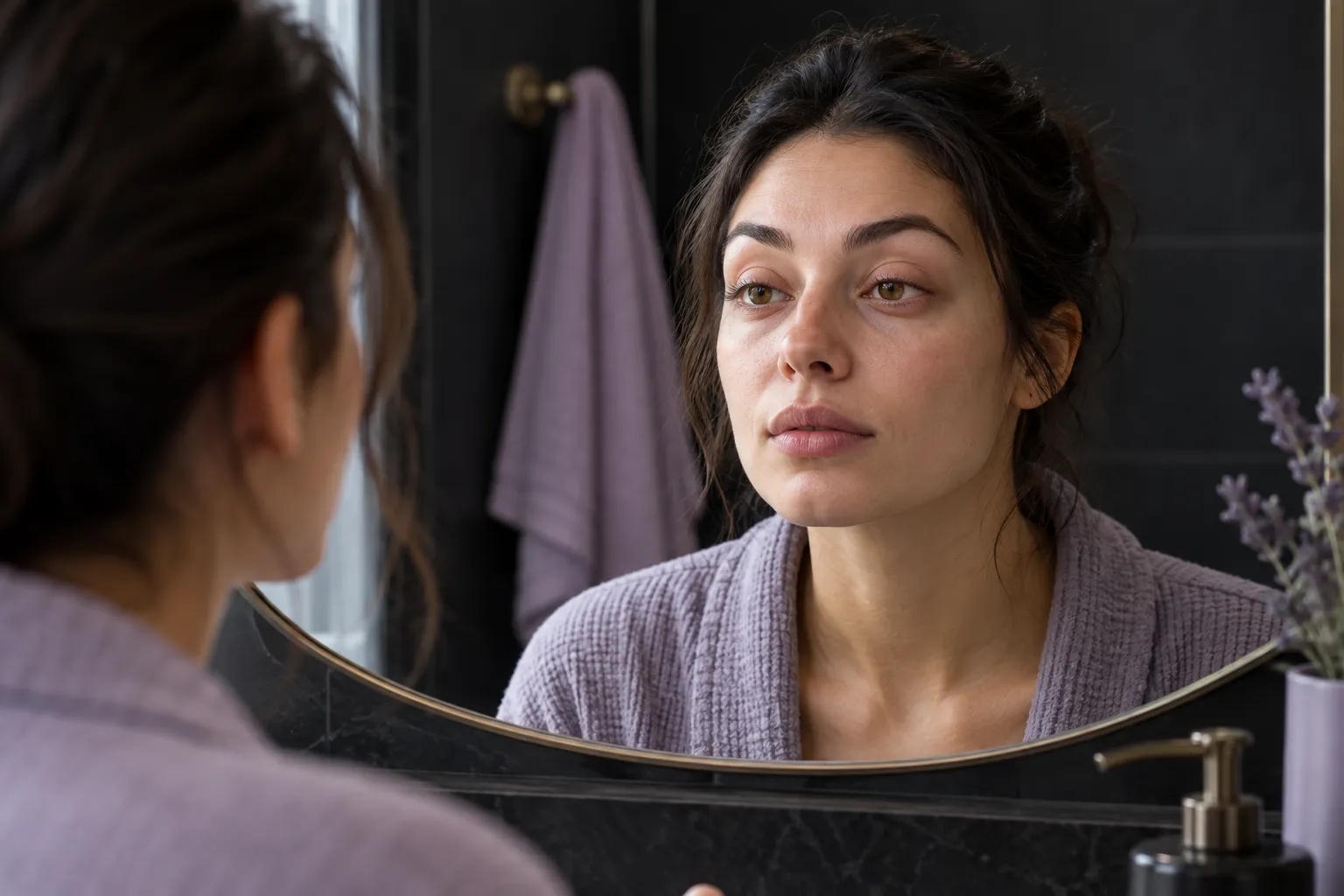
AI-generated illustration of a fictional adult.
Start with where the change is: your top lid, the lash line, the whole lid or the area below your eye. If it is mainly below the eyes, our guide to under-eye puffiness when you wake up covers that morning routine.
Which kind of eyelid puffiness is this?
Look for a specific pattern before choosing a remedy. One eyelid or both, itching or tenderness, and a bump or widespread fullness are useful details to record. These are clues, not a diagnosis; an eye examination may be needed to separate conditions that look alike. Merck Manual.
When puffy eyelids need medical help
Call 911 (or your local emergency number) for sudden swelling of the lips, mouth, tongue or throat, trouble breathing or swallowing, or collapse. These can signal a serious allergic reaction. NHS.
Get urgent care now for changed or double vision, a bulging eye, fever, deep eye pain, painful eye movement or unusual light sensitivity. Severe eye pain, headache or nausea with swelling also needs prompt care. Merck Manual, healthdirect.
Seek same-day assessment for a hot, painful red lid, especially if one-sided or spreading. Infection around the front of the eye can occur even with normal vision; infection inside the eye socket is more dangerous. Merck Manual.
Arrange an eye appointment if unexplained swelling lasts beyond 24–48 hours. Worsening or urgent symptoms override that window and the self-check below. Cleveland Clinic.
| What you notice | What it can fit | First action and compress choice |
|---|---|---|
| Both lids mildly puffy on waking; no itch or pain | Fluid-related puffiness | Try a cool cloth while upright; note the later appearance. |
| One tender bump at the lash edge | A stye | Warm compress; have an uncertain or worsening bump assessed. |
| A rounded lump farther inside the lid | A chalazion | Warm compress; arrange assessment if persistent or uncertain. |
| Itchy, watery eyes, perhaps with sneezing | Allergy | Avoid the trigger; cool cloth for comfort; ask a pharmacist about treatment. |
| Flakes or crusts at lash roots; oily lids | Blepharitis | Warm cloth and gentle lid cleaning; get advice if it does not improve. |
| Puffiness that stays, returns repeatedly or changes over time | Several possible causes | Arrange assessment and record the pattern; don't keep switching remedies. |
| Any urgent symptom listed above | A problem needing examination | Bypass home-care experiments and follow the safety box. |
The symptom clues come from Merck Manual and Cleveland Clinic's blepharitis guidance. Compress choices follow healthdirect and Cleveland Clinic's eye-puffiness advice. The table combines their guidance into a next-step chooser.
Why are my upper eyelids puffy when I wake up?
The usual overnight explanation is fluid accumulation, which is why clinical guidance recommends a slightly raised head. Mayo Clinic, Cleveland Clinic.
Think about three parts of the previous evening:
- Meals and sleep. Salt can contribute to water retention. Mayo Clinic also lists insufficient sleep among factors that worsen under-eye bags. Cleveland Clinic, Mayo Clinic.
- Crying. Fluid collects around the eyes while you cry, and nearby blood vessels widen, contributing to redness and irritation. Cleveland Clinic.
- What touched your eyes. Eye creams and makeup can contain irritating fragrances, dyes or preservatives. A product applied before bed belongs in your notes, even if it was sold to reduce puffiness. Cleveland Clinic.
If you drank alcohol, record it alongside sleep, meals and products rather than blaming one thing from one morning. Our guide to facial puffiness after drinking covers that broader pattern.
Is it allergies, a stye or something else?
Itching, dryness or irritation
Pollen, dust, mold and pet dander are possible allergy triggers. Dermatitis or eczema can also affect the eye area. Consider both your surroundings and skin products when describing the problem. healthdirect.
If allergy treatment hasn't helped, don't assume you need a stronger version. That is useful information for an eye professional, along with which product you used and for how long.
A localized bump
A stye involves infection, while a chalazion involves a blocked oil gland. A chalazion can initially hurt before becoming a less tender lump; pain alone cannot reliably tell the two apart. Merck Manual.
Crusts, flakes or repeated irritation
Blepharitis means eyelid inflammation. It can involve skin conditions such as rosacea, infection, eyelash mites or malfunctioning oil glands. Some cases recur, so finding the cause matters more than repeatedly treating the appearance. Cleveland Clinic.
Redness and discharge
Conjunctivitis can also cause a swollen eye, with redness and discharge. Allergy and infection need different treatment, so ask for advice rather than choosing drops by the word “redness” on the package. Mention recent injuries, insect bites or contact-lens use too. healthdirect.
How do I get rid of puffy eyelids at home?
For mild puffiness without the warning signs above, start by reducing irritation. Wash your hands, remove contact lenses and pause eye makeup and lash extensions while the swelling settles. Avoid rubbing. healthdirect.
Then choose the compress that fits the problem. You don't need to work through several remedies in one morning.
Should I use a warm or cold compress?
| Compress | Where it fits | How to use it |
|---|---|---|
| Cool | Plain fluid puffiness; comfort after crying or with allergy | Dampen a clean washcloth with cool water. Sit upright and hold it lightly around the closed eyes for a few minutes. |
| Comfortably warm | Stye or chalazion care | Hold a clean warm, damp cloth gently over the closed lid for 10–15 minutes, four times daily. |
| Comfortably warm, then gentle cleaning | Blepharitis care | Soften lash crusts with the cloth, then gently wipe the lids. Follow your clinician's cleaning plan. |
The cool-cloth technique comes from Mayo Clinic's under-eye guidance; Cleveland Clinic also recommends cooling after crying. The stye/chalazion schedule comes from healthdirect. Warmth can soften crusts and trapped oil in blepharitis, according to Cleveland Clinic.
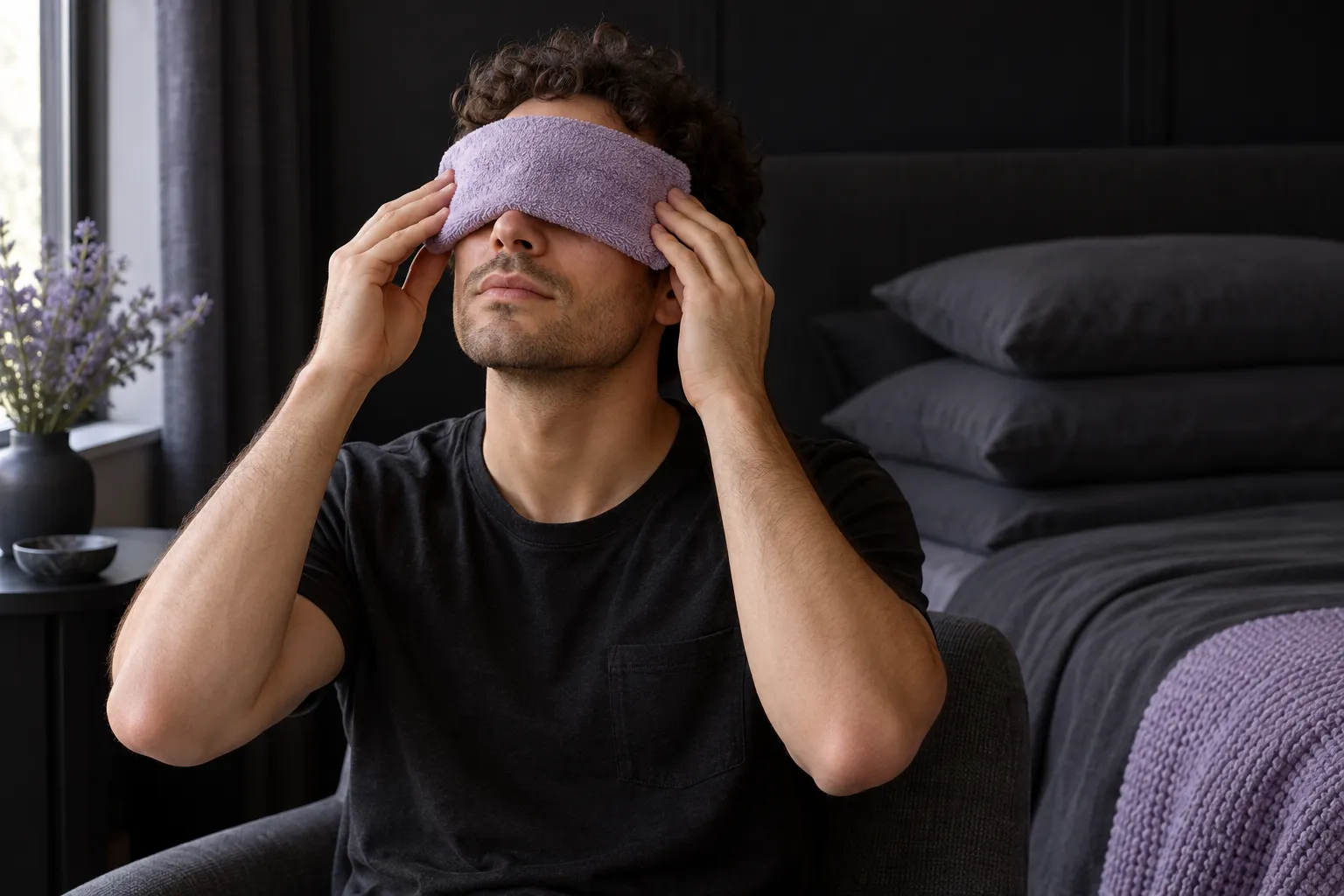
AI-generated illustration of a fictional adult demonstrating the cool-cloth setup. Use cool water for this step.
Keep the touch light, without pressing on the eyeball. Warm means comfortable, not hot. Don't scrub crusts or squeeze a bump. A cool washcloth avoids the need for bare ice on delicate skin; frozen packs need a protective towel. Cleveland Clinic: compresses, gentle lid cleaning.
Need a fast option before leaving home? If there are no warning signs and the puffiness feels like your usual fluid puffiness, sit upright, remove contacts and hold a cool, damp washcloth lightly around your closed eyes for a few minutes. It is a quick first step, not a guaranteed result.
What about drops, eye creams and other remedies?
For an allergy, a pharmacist or doctor can help select an antihistamine tablet or eye drop. Antihistamine drops won't treat nonallergic eye bags, and steroid eye drops should be used only as prescribed. healthdirect, Cleveland Clinic.
None of the sources we reviewed show that tea bags, cucumber slices, caffeine creams, rollers or extra drinking water outperform a clean cool cloth for upper-lid puffiness. That is an evidence gap, not proof that every alternative is ineffective. There is no need to add a new eye product while the skin is irritated. Cleveland Clinic.
If you're considering a full-face dunk, read what ice-water facials can and cannot do before adding one.
What should I change tonight?
For familiar fluid puffiness, try a comfortable, slightly raised head position, enough sleep and less high-salt food. Mayo Clinic gives these measures for under-eye bags; we think they are reasonable starting habits for the lids too. Mayo Clinic.
Choose one manageable change. For puffiness across the cheeks as well, our gentle morning face routine covers the wider area.
What if my eyelids stay puffy all day?
An unchanged afternoon appearance does not identify the cause. In particular, don't conclude that new upper-lid swelling must be fat or that it needs surgery.
Age-related bags below the eyes can involve looser supporting tissues and fat shifting forward, as well as fluid. That is different from establishing why a top eyelid has newly swollen. Mayo Clinic.
Tell your clinician about symptoms beyond the lids. Puffy eyelids together with swelling in the legs or ankles, foamy urine or fluid-related weight gain can occur with nephrotic syndrome, a kidney condition. Eyelid appearance alone cannot establish it; evaluation includes urine testing. NIDDK.
Graves' disease is another possible medical cause of swollen or bulging eyes. healthdirect. For puffiness across the rest of your face, note that wider distribution when seeking advice.
How can I track recurring eyelid puffiness for seven days?
Use this self-check for familiar, mild puffiness. It is an observation worksheet, not a study or a diagnostic test. Recurring episodes can be recorded while arranging advice; don't wait to complete the week if the safety box applies.
Copy the following into a phone note and repeat it on days 1–7. A short entry is enough; “nothing different” is useful information too.
| Record | What to write |
|---|---|
| Day and time | Date, waking time and time of the first check |
| Exact location | Right, left or both; upper, lower or whole lid; lash edge if relevant |
| Symptoms | Itch, tenderness, a bump, crusts or discharge; write “none” if absent |
| Recent context | Eye products, contacts, medicine changes, sleep, salty meals, alcohol or crying |
| Later check | A consistent afternoon time; less, similar or more noticeable |
| What you tried | Cloth temperature and duration, or no action; comfort afterward |
Optional matched photos: use the same light, camera distance, angle and relaxed expression each time. Keep the morning timing relative to waking consistent, and choose one afternoon check time. Skip filters and avoid stretching the eyelid to make a crease show. These choices make the record easier to compare; photos cannot explain the cause. Our morning-afternoon photo check covers the under-eye version.
Completed fictional example — not a user result:
| Day/time and location | Symptoms and context | Later check and action |
|---|---|---|
| Day 1, 7:30 a.m.; both upper lids | Mild fullness; no itch, pain or crusts; no new product or contacts; usual sleep and meals | 3 p.m.: less noticeable; used a cool cloth for a few minutes |
That row records a change, but cannot show whether the cloth caused it. At the end of the week, summarize what recurred, which lid was affected and whether other symptoms appeared. Bring that note and your medicine/product list to an appointment if needed.
For familiar everyday puffiness, DePuff's quiz builds a personalized daily de-puffing routine, with face-scan tracking in the app. Build my routine.
How long does it take for puffy eyelids to go down?
The cause matters more than how dramatic the first mirror check looks. After crying, improvement can begin within minutes or puffiness can remain the following morning. Cleveland Clinic. Diagnosed acute blepharitis may take a week or two to resolve after its cause is treated; chronic blepharitis can return. Cleveland Clinic.
Those examples are not a waiting period for unexplained swelling. If swelling has no clear cause and lasts beyond 24–48 hours, arrange an eye appointment; if a clinician has already diagnosed a condition, use their follow-up plan. For everyday appearance goals beyond the eyelids, our guide to realistic depuffing timelines helps separate a morning check from longer habit comparisons.