 DePuff
Your face may look puffy or bloated because of overnight fluid retention, sleep changes, allergies, medicines or a medical condition. When it happens, where it swells and what other symptoms come with it help you decide what to do next.
Common causes at a glance
- Overnight fluid: slight puffiness on waking that fades within a few hours is usually normal fluid retention.
- Too little or too much sleep: either can make swelling more noticeable.
- Salty food and heavy drinking: excess salt and alcohol overuse can contribute to fluid-related swelling.
- Allergies: hay fever, foods, stings and medicines can cause facial swelling.
- Crying: fluid collects under and around the eyes.
- Rosacea: swelling, especially around the eyes, can accompany flushing.
- Before your period: being premenstrual can contribute to mild, general fluid-related swelling (edema).
- Medicines: prednisone can affect the face; NSAIDs, estrogens and some blood-pressure medicines can cause edema.
- One-sided swelling: a tooth abscess, salivary gland problem, cyst or swollen lymph node may explain it.
- Other medical conditions: kidney disease, thyroid disease and Cushing syndrome are possibilities that need clinical assessment.
Sources: Cleveland: facial swelling, edema, crying, moon face; Mayo: edema; NHS: rosacea.
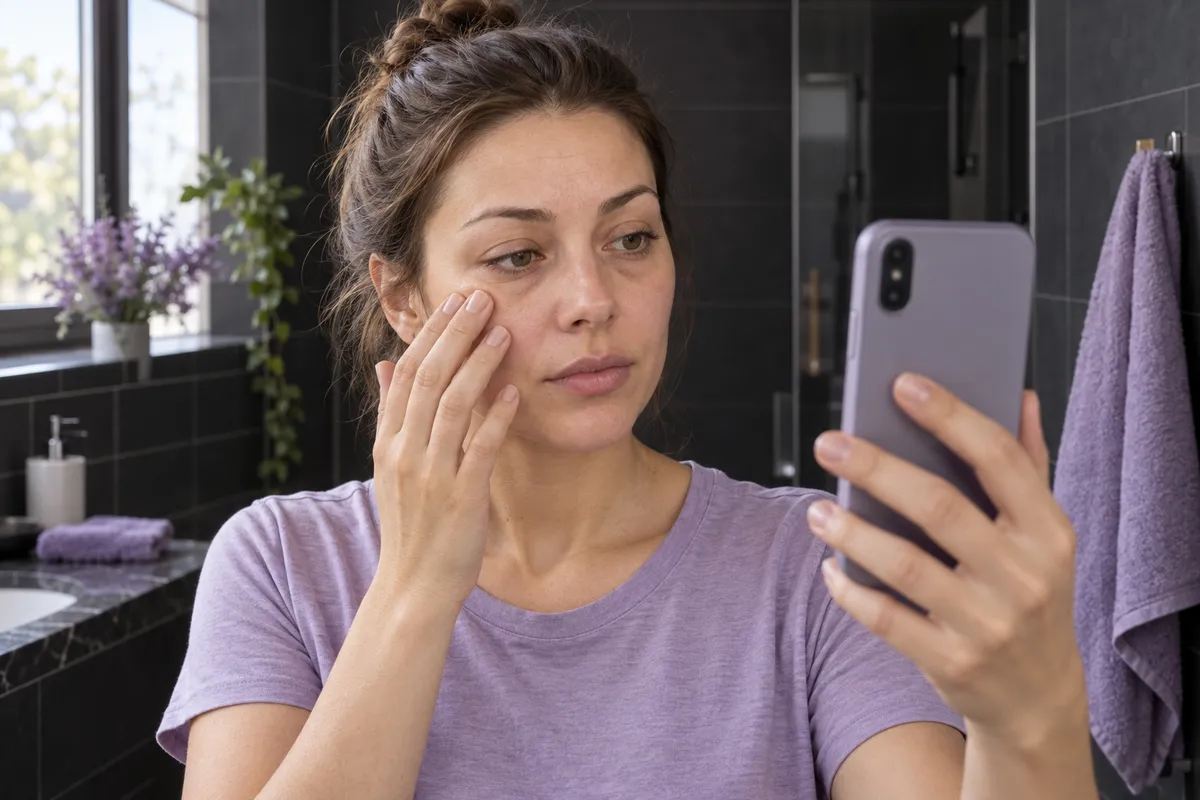
AI-generated illustration of a fictional person.
When to get help
- Call 911 for sudden swelling of your lips, mouth, tongue or throat; trouble breathing, throat tightness or difficulty swallowing; lips, tongue or skin turning blue, gray or pale; or sudden confusion, marked drowsiness, dizziness or fainting. These can be signs of anaphylaxis, a serious allergic reaction. NHS: angioedema
- Get emergency care for facial swelling from a burn or from a bite or sting by a venomous insect. Contact a clinician promptly for other sudden or unexplained swelling, severe pain, fever, skin discoloration or tenderness, or swelling that worsens or lasts more than a few days. Cleveland Clinic
- If you're pregnant or gave birth in the past few weeks, get checked right away for sudden swelling of your face, hands or feet, a severe headache that doesn't ease with simple painkillers, vision changes such as blurring or flashing lights, or pain below the ribs. Any one of these can be a sign of preeclampsia. Contact your obstetric provider or labor and delivery unit. NHS: pre-eclampsia
What causes a puffy face? Match it to when it happens
Use the closest pattern to choose a next step. A photo, face scan or quiz can help you notice a pattern, but it cannot diagnose the cause.
| When or where you notice it | Possible explanations | Next step | Keep in mind |
|---|---|---|---|
| Familiar, mild puffiness on waking; less later | Overnight fluid, sleep or allergies | Try the gentle steps below; note the evening before | New symptoms matter even with a familiar pattern |
| Puffier after an unusually salty evening | Fluid retention | Record meals alongside sleep and other symptoms | Several evening habits can change together |
| Sudden swelling during or after eating | Food allergy or angioedema | Follow the safety box; get unexplained swelling assessed | Treat this separately from next-morning puffiness |
| A cheek or jaw area repeatedly swells, including around meals | Dental or salivary gland problems | Arrange medical or dental assessment; mention meal timing | Timing alone cannot identify a blocked gland |
| New fullness stays all day or keeps increasing | Medicines, infection or another medical condition | Bring the onset date and medicine list to a clinician | The course of the change helps guide assessment |
| One side looks swollen, especially with tooth pain | Tooth abscess, a gland problem or another local cause | Contact a dentist or clinician promptly | Location alone cannot distinguish these causes |
The possibilities come from Cleveland Clinic's facial-swelling guide, Mayo Clinic's edema guidance and the NHS angioedema page.
Why is my face puffy in the morning?
Slight puffiness on waking that fades within a few hours is usually normal overnight fluid retention and probably not a cause for concern. Both too little and too much sleep can make facial swelling more noticeable. Start by asking whether this is your familiar morning pattern or a new change. Cleveland Clinic
For the familiar pattern, protect a regular bedtime and try the relief steps below. For a fuller walkthrough, use our morning depuffing routine.
If only your eyelids or under-eye area look different, describe that precisely. “Both lower lids look fuller when I wake up” is more useful than “my whole face is swollen.” Our guide to puffy eyes when you wake up focuses on that smaller area.
Why does my face look puffy after eating or a night out?

AI-generated illustration of an evening's food and surroundings.
A very salty dinner can worsen next-morning under-eye puffiness. Mayo Clinic lists salty food among causes of mild edema, or fluid-related swelling. A clinical eyelid review notes that under-eye bags that are much worse the morning after a lot of salt point to inflammation around the eyes, so if that pattern is strong or keeps happening, mention it to a clinician. If dinner was unusually salty, return to balanced meals and use less added salt. Mayo Clinic, Eyelid Edema review
Alcohol belongs in the record too. Cleveland Clinic lists alcohol overuse among contributors to edema, which can affect the face. Note what you drank alongside the rest of the evening; our guide to alcohol and facial puffiness covers the subject in more detail. Cleveland Clinic: edema
Be precise about “after eating.” Did swelling begin while eating, later that evening or the next morning? Was it one cheek, both eyelids or the mouth? Record the sequence and use the matching row in the table. Don't deliberately eat a suspected allergy trigger again to test it.
Could allergies, crying, rosacea or my period explain it?
Allergies and new products
Hay fever, food allergies, sting reactions and medicine allergies can cause facial swelling. Tell a clinician about itching, a rash, eye symptoms and any new skincare or medicine. Angioedema is swelling under the skin; it can also be non-allergic, including reactions associated with ACE inhibitor medicines. Cleveland Clinic, NHS
Crying
Crying can leave fluid under and around the eyes. Time and a cool compress are the simplest fixes. Gentle massage or a light roller may help, but touching the delicate eye area can sometimes irritate it and make swelling worse, so keep any touch light and don't rub. Cleveland Clinic: swollen eyes after crying
Rosacea and its triggers
Rosacea can include swelling, especially around the eyes, along with flushing or stinging. Triggers include hot drinks, hot or cold temperatures, sunlight, alcohol, spicy foods and stress. Discuss skin treatment with a clinician and note which triggers affect you. NHS: rosacea
The days before your period
Being premenstrual can contribute to mild edema. Add cycle timing to your notes if relevant, alongside other changes that week. Mayo Clinic
Why is my face always puffy, or swollen on one side?
If swelling persists despite ordinary meals, fluids and sleep, seek an assessment instead of tightening those habits further.
Medicines and gradual rounding
Longer-term steroid use, including prednisone, is associated with medical “moon face.” Cushing syndrome and hypothyroidism, an underactive thyroid, are other possible causes of this rounded appearance. See what “cortisol face” really means for more about these causes. Cleveland Clinic: moon face
General edema can also be a side effect of NSAIDs (anti-inflammatory pain medicines), estrogens, some blood-pressure medicines, contraceptive pills and antidepressants. Bring medicine names and start dates to your prescriber; do not change or stop medicines yourself. Mayo Clinic, NHS: oedema
Local infection, injury or a lump
A clinician may consider infections such as cellulitis (a skin infection), sinusitis, pink eye or a dental infection, or a salivary gland problem. A cyst, a lipoma (a fatty lump) or swollen neck lymph nodes can also cause localized fullness. Swelling can follow an injury or surgery involving the face, jaw or neck. Cleveland Clinic
If you recently had fillers or another cosmetic procedure, tell the clinic that treated you about new or worsening swelling.
Mumps causes painful cheek and neck swelling; it may start on one side before involving both. Call ahead if you think you may have it. NHS: mumps
Conditions beyond the face
Kidney-related edema often affects the legs and around the eyes; nephrotic syndrome is one possible cause. Mention swelling elsewhere too: liver cirrhosis can cause swelling in the abdomen and legs. Mayo Clinic
The clinical facial-swelling list also includes an overactive thyroid, lupus and preeclampsia. For pregnancy and postpartum warning signs, follow the safety box above. Cleveland Clinic: facial swelling
A less common possibility, superior vena cava syndrome, can involve face and neck swelling together with upper-chest or arm swelling and bulging neck or chest veins. That combination needs prompt medical assessment. Call 911 if it comes with dizziness, fainting, high-pitched noisy breathing or confusion. Cleveland Clinic: SVC syndrome
Is it fluid, facial fat or a medical change?
A fuller-looking face is not automatically weight gain. Use these distinctions to describe the change:
| Possibility | What matters | What the pattern cannot prove |
|---|---|---|
| Fluid-related puffiness | Record changes between waking and later | Improvement during the day does not rule out medical edema |
| Structure, including fat around the eyes | Structural eye bags usually develop slowly over years. A change in eyelid appearance over weeks or months deserves assessment | An unchanged appearance all day does not establish that it is fat |
| A medical change | Consider onset, progression, symptoms and medicines together | Timing alone cannot separate a medical cause from an everyday contributor |
Source for the eye-area distinctions: Eyelid Edema review
What can I try for familiar mild puffiness?
Keep the first steps simple:
- Use a cool compress. Gently hold a clean, cool damp washcloth against the puffy area.
- Keep your head elevated. Choose a comfortable raised position instead of lying flat. Cold and head elevation are symptom-relief measures recommended by Cleveland Clinic.
- Pick one habit to make more consistent. Start with a steadier bedtime or less unusually salty food, using the context above.
If you'd like a daily plan to follow, DePuff AI builds a personalized daily de-bloating routine with timed steps and face-scan tracking, so you can follow changes over time. Take the quiz to build your routine. For costs before you begin, see DePuff's pricing and trial details.
If you are considering a roller or gua sha, read the facial massage steps, evidence and reasons to skip it first. You do not need to buy a tool for the steps above.
How can I spot a pattern over seven days?
For familiar mild puffiness, keep a short record. Seven days is an observation window, not a medical test or a deadline for results. The safety box takes priority.
Copy these fields into a note and fill them in once each day:
- Appearance: less, usual or more on waking; optional later comparison.
- Evening context: sleep, usual or unusually salty meals, alcohol if any.
- Other context: itchy or watery eyes, cycle timing if relevant, new products or recent prescribed medicine changes.
- Symptoms and next step: where it happened, anything else you noticed, and one action.
Optional photos on days 1 and 7: keep the time, indoor lighting, distance and expression the same. Skip them if they make you anxious. Record an ordinary week without adding alcohol or restricting food.
A completed example: Alex's week
This example is fictional, not a testimonial or an app result. Alex is tracking familiar mild morning puffiness. There is no alcohol, medicine change or new skincare during this example; cycle timing is not relevant.
| Day | Sleep and evening context | Morning → later | Other symptoms | Note or next step |
|---|---|---|---|---|
| 1 | Short sleep; unusually salty takeout | More → usual | None | Record both evening changes |
| 2 | Usual sleep and meals | Usual → less | None | Continue recording |
| 3 | Usual sleep and meals | More → usual | Itchy, watery eyes | Note the eye symptoms |
| 4 | Short sleep; usual meals | More → usual | Itchy eyes | Sleep and eye symptoms overlap |
| 5 | Steadier bedtime; usual meals | Usual → less | None | Keep observing |
| 6 | Usual sleep and meals | Usual → less | None | Keep the routine simple |
| 7 | Usual sleep and meals | Usual → less | None | Summarize the pattern |
Alex cannot conclude that salt caused day 1: sleep changed too. Days 3 and 4 make recurring eye symptoms worth discussing with a clinician. Alex chooses a steadier bedtime and brings up the itching. If Alex had developed tooth pain, one-sided swelling, or swelling that kept increasing, the log would stop there and the safety box would take over. A diary can help identify possible allergy triggers. Eyelid Edema review
At an appointment, bring the start date, affected areas, whether it changes during the day, accompanying symptoms, known allergies and medicine list. Cleveland Clinic
Quick answers
Why is my face bloated?
Facial swelling means fluid in facial tissue (facial edema), not stomach bloating. Don't treat it with gut-bloating fixes such as low-FODMAP diets or detox teas; use the timing table to choose a next step.
Why is my face suddenly puffy?
A sudden change can involve an allergic reaction or angioedema. Use the safety box now to decide whether you need emergency help or prompt assessment. NHS: angioedema
What does a puffy face mean?
Appearance alone cannot tell you whether this is everyday fluid or a medical change. New or persistent swelling needs assessment so treatment can address its cause. Cleveland Clinic
Does drinking more water help?
Extra water is not the default answer to facial swelling: the next step depends on its cause. Drink fluids normally, or follow your clinician's existing fluid advice, rather than forcing extra water to try to change your face.
Sources
- Cleveland Clinic: Facial swelling; Edema; Moon face; Swollen eyes from crying; Superior vena cava syndrome.
- Mayo Clinic: Edema: symptoms and causes.
- NHS: Angioedema; Pre-eclampsia; Rosacea; Mumps; Oedema (swelling).
- Sami and colleagues: Eyelid Edema, Semin Plast Surg, 2007.