 DePuff
Yes—facial gua sha may help with temporary puffiness and relaxation, although direct research on everyday facial depuffing is limited. The evidence reviewed here does not establish face-fat loss, a lasting lift, collagen growth or permanent jawline reshaping. Cleveland Clinic, dermatologist Jane Yoo, facial trial
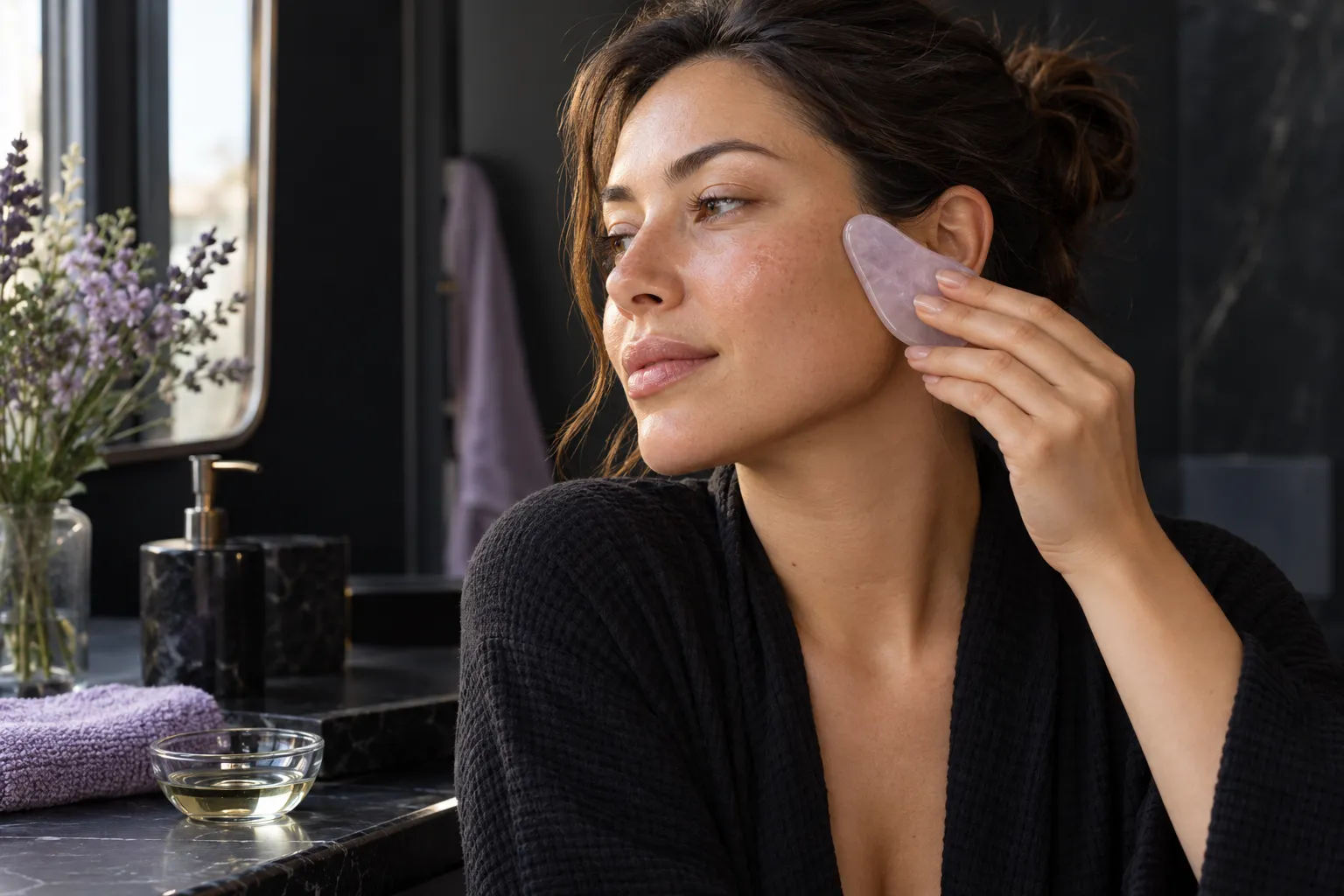
AI-generated illustration of a fictional adult.
Worth trying? If you enjoy a short facial massage and want to see whether it helps familiar morning puffiness, yes. If you would only keep doing it for a dramatic transformation, save your money. Here is what the evidence supports, how to try it, and how to judge whether the few minutes are worthwhile for you.
Does gua sha actually work, or is it placebo?
Gua sha is tool-assisted massage with roots in traditional Chinese medicine. Facial use is gentler than traditional body treatment. Cleveland Clinic
There are measured physical effects, so calling the whole practice placebo goes too far. But no study here compared it with a sham treatment, so part of what people feel or notice could still be expectation. And the location and outcome matter: a circulation change on someone's back cannot establish a slimmer face.
What does gua sha do? Possible facial benefits include temporary depuffing and relaxation; one small facial trial also found reduced jaw-muscle tone. A separate study measured increased blood flow on the back.
| Claimed benefit | What was actually measured | Verdict |
|---|---|---|
| Less facial puffiness | Cleveland Clinic describes possible lymph movement, while noting that research does not directly address this benefit. | Plausible; not a demonstrated everyday facial-puffiness treatment. Clinical guidance |
| Better circulation | In 11 healthy volunteers, laser Doppler imaging found a fourfold rise in measured surface microcirculation (perfusion units) during the first 7.5 minutes after back treatment; it remained elevated through 25 minutes. | A measured back effect, not fourfold facial depuffing. It used traditional body scraping intended to raise petechiae, unlike a gentle facial glide. Nielsen, 2007 |
| Changed facial contours | A facial trial enrolled 34 women; 33 completed it: 17 used the curved gua sha edge of a combined roller/gua sha device, 16 the roller. Both groups had smaller surface-distance measurements after eight weeks. | Preliminary cosmetic evidence; no untreated or sham group. Ahn, 2025 |
| Less facial tension | That facial trial found reduced measured tone and stiffness in the masseter (jaw) muscle with gua sha; the roller group had no significant change. | Interesting muscle findings, not evidence that DIY massage treats TMJ disease. Ahn, 2025 |
| Pain relief | An open randomized trial assigned 48 chronic neck-pain patients to one gua sha session or a heat pad. Gua sha produced greater pain improvement at seven days. | Short-term neck-pain evidence using traditional body gua sha intended to raise petechiae, not facial sculpting evidence. Braun, 2011 |
Will it change my jawline or just reduce puffiness?
The facial trial's gua sha group had surface-distance reductions of 2.23–2.40 mm; the roller group had reductions of 2.75–3.26 mm, without a significant contour difference between groups. Those are distances along the skin—not millimeters of lifting or fat lost. The authors note these changes exceed a 2.0 mm threshold linked to visible contour change, but they took no standardized photos to show it. Puffiness and lymph flow were not measured. Ahn, 2025
For a jawline that looks temporarily less puffy, fluid movement is a reasonable explanation. That is different from changing its underlying structure. Jane Yoo
What about collagen and wrinkles? The facial trial measured neither collagen nor wrinkles; gua sha did not significantly improve its elasticity measures. The roller did. Claims of collagen building or lasting anti-aging benefits exceed those results. Ahn, 2025
How long until I see results—and do they last?
Separate the time you spend massaging from the time any visible change lasts.
| When | What to expect | How to use that information |
|---|---|---|
| During or just after a brief session | You may enjoy the sensation or notice a temporary cosmetic difference. You may also see no visible difference. | Record comfort and appearance separately. Feeling good is a useful reason to keep a ritual. |
| Over the following hours | Jane Yoo says visible depuffing typically fades over the following hours; this is clinical guidance, not a timed swelling trial. | Do not plan around a guaranteed all-day effect. |
| After weeks of use | The facial study used 10 minutes, five times weekly, for eight weeks. It did not follow participants after stopping. | Eight weeks is a research schedule, not your deadline for results. |
Sources: Jane Yoo's temporary-effect guidance and the facial trial. For expectations beyond massage, see how long face debloating can take.
How do I use it without pulling my skin?
Aim for a light glide. Use lotion or serum for slip, work outward in one direction, skip swollen areas, and keep the tool clean and intact. Cleveland Clinic's technique guidance
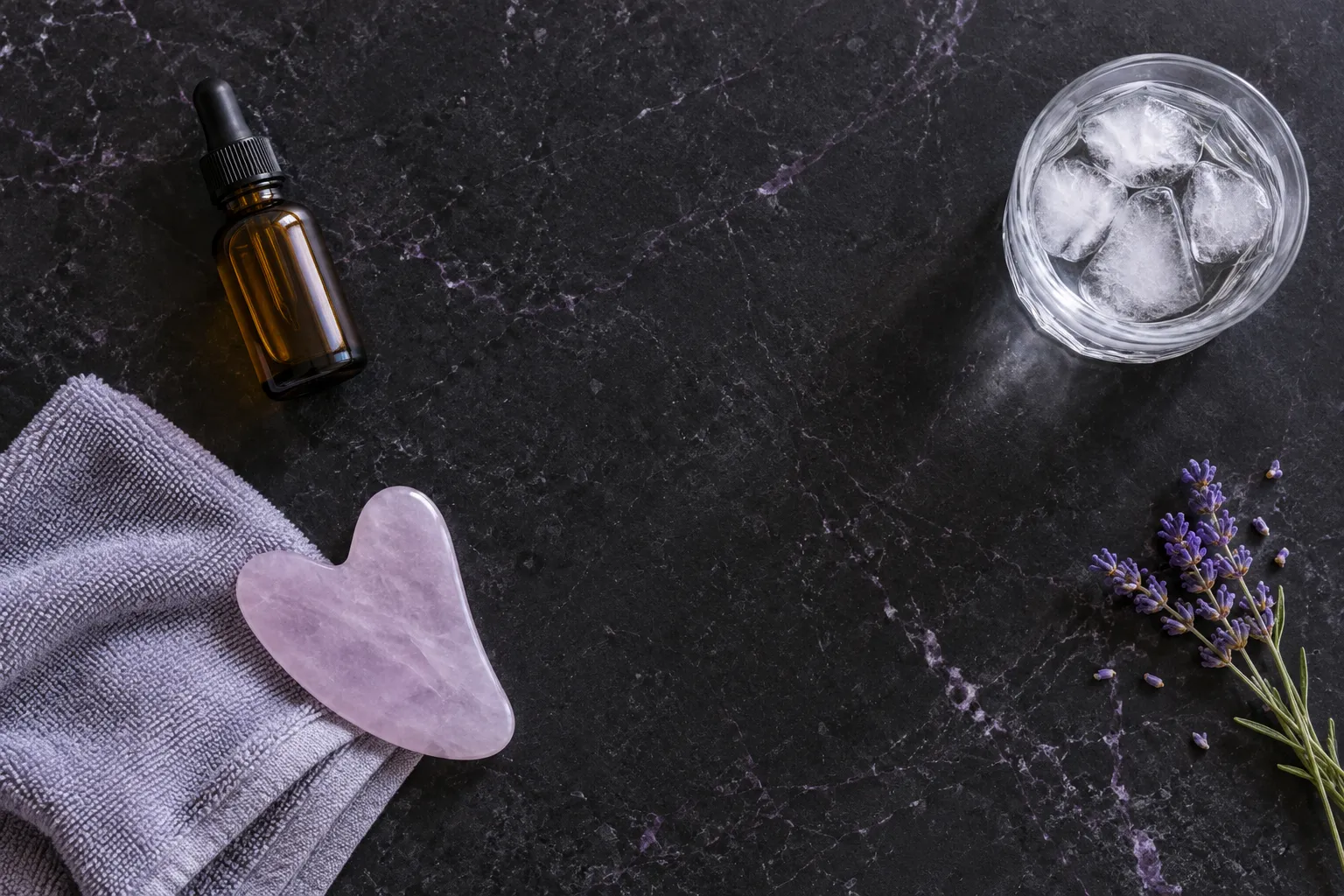
AI-generated illustration of a skincare setup.
A five-minute gua sha routine for familiar puffiness
These timings are our convenient schedule, not a validated treatment dose. Use it on calm, intact skin; keep the touch featherlight over everyday morning puffiness and skip any spot that is swollen, tender or sore. Check the safety box below first.
- 0:00–1:00 — Prepare. Wash your hands, clean the tool according to its care instructions, and check its edges for chips. Apply a little lotion, serum or facial oil you already tolerate. Oil is optional; comfortable glide is the goal.
- 1:00–3:30 — Jaw and cheeks. Hold the tool nearly flat, rather than digging its edge into your face. Lightly glide from the chin toward the ear along the jaw, then from beside the nose outward across the cheek. Lift to reset each stroke. Split the time between both sides.
- 3:30–4:00 — Forehead. Use short, light glides from the center toward the temples, staying above the eyebrows. Leave eyelids out of this routine.
- 4:00–5:00 — Finish. Clean the tool, put it somewhere it will not fall, and note how the session felt. Allow extra time if its cleaning instructions require it.
The light, outward glides and slippery base follow clinical facial-use guidance. For the full drainage route, including the neck, use our face-and-neck massage stroke map. Its hands-only skin stretches are a different movement from gliding a stone; do not turn them into deep neck scraping.
Chilling the stone is optional; none of the studies reviewed here tested whether cold adds a benefit.
If the tool catches: pause and adjust the slip or your grip instead of forcing the stroke. You do not need a special branded oil or a precise repetition target to follow this schedule.
How often should I do it? What if I stop?
Dermatologist Jane Yoo suggests a few times a week for most people; daily use isn't needed for the de-puffing effect and can irritate sensitive skin. Jane Yoo The studies above do not establish an optimum schedule or show what happens after stopping. Choose whether to continue based on comfort and usefulness, rather than protecting a streak.
A seven-day check that keeps the comparisons fair
This is an observation plan, not a seven-day transformation promise. Choose two or three session mornings during the week. On those mornings, take a photo just before and just after the same brief routine. On non-session mornings, take just the first photo at the same time after waking.
Set up once: same room, fixed light, camera lens, distance, camera height, relaxed expression and posture. Take the first photo at the same interval after waking—say, 20 minutes—before skincare or massage. Avoid filters. Note sleep, unusually salty meals and new products so other changes are not invisible in the record.
Read the pictures in two separate ways:
| Comparison | Question it helps answer |
|---|---|
| Before versus after the same session | Did I notice an immediate difference today? |
| Pre-session pictures across the week | Are my mornings looking different before I use the tool? |
Neither comparison proves gua sha caused a change. A morning photographed after massage should not quietly replace a missing before picture.
Fictional example—not a DePuff user result or a clinical test: Alex plans first photos 20 minutes after waking and sessions on Monday, Wednesday and Saturday. Wednesday's first photo is accidentally taken after massage, so Alex labels it “after only” and leaves it out of the morning-to-morning comparison. On Sunday, Alex reviews the remaining first photos together and the complete before/after pairs separately. The log helps decide whether to keep the routine; it does not manufacture a result.
Do I need gua sha, or will my hands or a roller do?
Choose by the experience you want and the tool you will actually use. This is a convenience comparison, not a clinical ranking.
| Option | Why choose it? | What takes practice? |
|---|---|---|
| Hands | No purchase, nothing extra to pack or drop. | Learning the gentle skin stretches in the hands-only drainage method. |
| Roller | A handle and rolling motion may feel simpler. | Keeping the contact light rather than bearing down. |
| Gua sha | You prefer slow glides and a tool with different curves. | Managing angle, slip and an oily grip. |
The reviewed evidence establishes no depuffing winner. Start with your hands if you are unsure about buying anything. If you want a stone, prioritize a comfortable grip and smooth, undamaged edges. Jade, rose quartz and stainless steel are preference choices, not proven upgrades for your skin type. Cleveland Clinic, Jane Yoo
Who should skip it—and should it leave red marks?
A face massage should not aim to leave bruises or red dots. A little pinkness can occur, according to Cleveland Clinic. Dots, purple marks, bruising or pain are reasons to stop. Facial technique is gentler than traditional body gua sha; producing petechiae is not the goal. Baylor Scott & White
- Stop for pain or bruising. Tiny red or purple dots can be petechiae: small spots of bleeding under the skin from broken capillaries Cleveland Clinic. Facial gua sha is not meant to create them, so they are not a sign it is working Baylor Scott & White. Avoid wounds, sunburn and rashes.
- Skip inflamed breakouts, and be cautious with rosacea-prone skin, broken capillaries or fragile skin. After fillers or injectables, ask your injector before using pressure, especially in the first few weeks; there is no universal restart date. Jane Yoo
- Blood thinners or a bleeding disorder? Skip DIY gua sha. A professional acupuncture safety manual limits gua sha for people taking anticoagulants (and some other blood-thinning products) or with bleeding disorders to practitioners trained to judge bleeding under the skin and tissue response. Ask your prescriber before using any facial pressure tool, including a roller, and never stop prescribed medication to use a beauty tool. Professional gua sha safety guidance, PDF page 77
- Check first if you have circulation problems, diabetes, eczema or psoriasis, are pregnant, or are receiving chemotherapy. Cleveland Clinic
- Skip any area that is swollen, tender or bruised. Cleveland Clinic warns that pressing into swollen skin can burst small blood vessels and bruise. Cleveland Clinic New, painful, unexplained or post-surgery swelling is a reason to contact your healthcare provider, not to try this routine.
For the eye area, see gentler options for puffy eyes in the morning.
What if I still look puffy?
Do not make a longer session your automatic next step. First, revisit the possible reasons your face looks puffy, then choose one manageable step from our morning routine for a less puffy face.
If putting the daily steps together is the hard part, DePuff's quiz builds a personalized daily de-puffing routine, with face-scan tracking in the app. Build my routine.